 Agent
Agent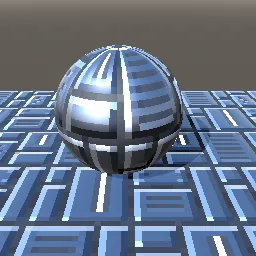
What this component contains
ATTRIBUTION.mdLICENSEREADME.mdblender_material.pycomponent.jsonmaterial.trespixel_scifi_panel.pypngio.pypreview.pngtest_package.pytexkit.pyverification/native.json
How it works
- Entry point
- generate
- Maps
- albedo, normal, roughness, metallic, height, ao, emissive
- Parameters
- art_pixels, panels, subdivision, lights, vents, hazard, rivets, relief and 3 more
- Presets
- default, clean_lab, rusty_industrial, alien_hull
- Tileable
- yes
- Command line
- python pixel_scifi_panel.py --size 1024 --seed 7 --preset NAME --out DIR [--width W --height H] [--set NAME=VALUE] [--directx-normal] [--orm]
- Godot material
- material.tres
- Blender builder
- blender_material.build_material(folder)
Recorded checks
godot 4.7.2.stable.official.ed1daf0bf
command_line_generates_declared_mapsmaps_decodemaps_have_declared_size_and_channelsmaps_tile_without_a_seamnormal_vectors_unit_length_facing_outmaps_carry_detailgodot_imports_the_mapsgodot_material_template_loads_every_mapgodot_compatibility_rendercapture_shows_the_textured_surfaceblender_builds_the_material
Limits to consider
Stylized pixel art with the light from the top left baked into the plate bevels. The module repeats on a regular panel grid aligned with the tile edges, which suits modular plating but shows the grid on large areas. Plates are rectangles split at most twice; details are fixed small patterns, and lights do not animate. Metal and glass take fixed roughness values per class. The normal map treats each art pixel as a flat facet. Output sizes that are not a whole multiple of art_pixels give art pixels of unequal widths. Occlusion is a blurred-height estimate posterized to eighths.