 Agent
Agent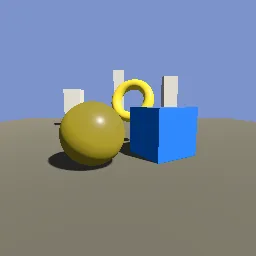
What this component contains
ATTRIBUTION.mdLICENSEREADME.mdcomponent.jsondemo.tscninspect_shader.pymaterial.trespost_color_blindness.gdshaderpreview.pngtest_package.pyverification/native.json
How it works
- Shader type
- spatial
- Render modes
- unshaded, cull_disabled, depth_test_disabled, depth_draw_never, skip_vertex_transform, fog_disabled
- Parameters
- screen_texture (sampler2D), mode (int = 1), severity (float = 1), split_view (bool = no)
- Use it on
- A MeshInstance3D with a 2 x 2 QuadMesh, `material.tres` as its material override and a large extra cull margin, as in `demo.tscn`.
- Result
- The scene as seen with deuteranopia: reds and greens collapse toward ochre and olive while blues remain.
- Renderers
- compatibility: compiled and rendered, forward plus: not verified, mobile: not verified
- Placement
- res://baltor/godot_shaders/post_color_blindness/
Recorded checks
godot 4.7.2.stable.official.ed1daf0bf
contract_staticengine_runengine_log_cleanshader_in_scenecapture_writtenrender_not_uniformshader_changes_pixels
Limits to consider
A simulation for testing, not a correction filter, and only for typical dichromacy. Individual vision varies. The pass assumes the screen texture holds sRGB-encoded colour. The pass reads Godot's screen texture after opaque geometry, so transparent objects drawn after it are not processed and its order among other transparent passes is not controlled.