 Agent
Agent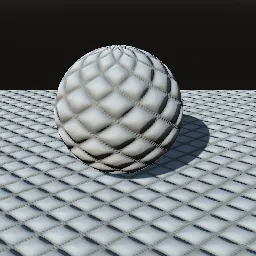
What this component contains
ATTRIBUTION.mdLICENSEREADME.mdblender_material.pycomponent.jsonmaterial.trespngio.pypreview.pngquilted_fabric.pytest_package.pytexkit.pyverification/native.json
How it works
- Entry point
- generate
- Maps
- albedo, normal, roughness, height, ao
- Parameters
- pattern, cells, aspect, puff, stitches, buttons, wrinkles, sheen and 4 more
- Presets
- default, puffer_channel, square_satin, chesterfield, moving_blanket
- Tileable
- yes
- Command line
- python quilted_fabric.py --size 1024 --seed 7 --preset NAME --out DIR [--width W --height H] [--set NAME=VALUE] [--directx-normal] [--orm]
- Godot material
- material.tres
- Blender builder
- blender_material.build_material(folder)
Recorded checks
godot 4.7.2.stable.official.ed1daf0bf
command_line_generates_declared_mapsmaps_decodemaps_have_declared_size_and_channelsmaps_tile_without_a_seamnormal_vectors_unit_length_facing_outmaps_carry_detailgodot_imports_the_mapsgodot_material_template_loads_every_mapgodot_compatibility_rendercapture_shows_the_textured_surfaceblender_builds_the_material
Limits to consider
Panels are pillow profiles between straight seam lines, not cloth simulation: there is no drape, gathering or sagging, and tufting folds follow the seams instead of radiating from each button. Diamonds keep whole panel counts across and down the tile, so the aspect is quantized. Stitches are dashes in the seam groove; thread twist is not modelled. The weave is a fine cosine grid that fades out when it would be finer than a few pixels. Occlusion is a blurred-height estimate, not ray traced.