 Agent
Agent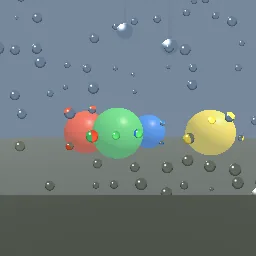
What this component contains
ATTRIBUTION.mdLICENSEREADME.mdcomponent.jsondemo.tscninspect_shader.pymaterial.trespreview.pngrain_glass_droplets.gdshadertest_package.pyverification/native.json
How it works
- Shader type
- spatial
- Render modes
- unshaded, cull_disabled, depth_draw_never, shadows_disabled
- Parameters
- screen_texture (sampler2D), drop_density (float = 12), drop_size (float = 0.28), runner_columns (float = 7), runner_speed (float = 0.35), refraction (float = 0.06), mist_blur (float = 3), mist_tint (vec4 = 0.82, 0.87, 0.92, 1) and 1 more
- Use it on
- A quad (the pane) in front of the scene, with UV v pointing down the glass.
- Result
- A misty pane with clear beads of water showing sharp, bent bits of the scene, and drops sliding down.
- Renderers
- compatibility: compiled and rendered, forward plus: not verified, mobile: not verified
- Placement
- res://baltor/godot_shaders/rain_glass_droplets/
Recorded checks
godot 4.7.2.stable.official.ed1daf0bf
contract_staticengine_runengine_log_cleanshader_in_scenecapture_writtenrender_not_uniformshader_changes_pixels
Limits to consider
Screen-space refraction cannot show what is off screen and does not invert the view like a real lens. Drops do not merge or interact; runners can pass through static drops. The mist blur depends on the screen texture's mipmaps.